

Portable Hardness Testing of Foundry Sand Cores and Molds
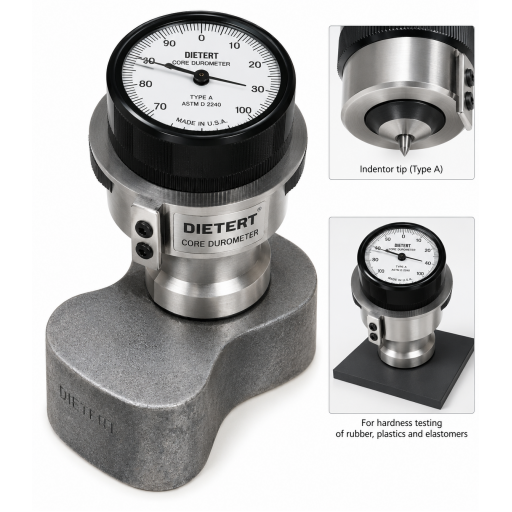
The Dietert No. 674 Core Hardness Tester is a compact, portable instrument for measuring the surface and subsurface hardness of baked foundry cores and dry sand molds. Designed for convenient production-floor testing, it helps foundries monitor core consistency and identify variations that can affect casting quality.
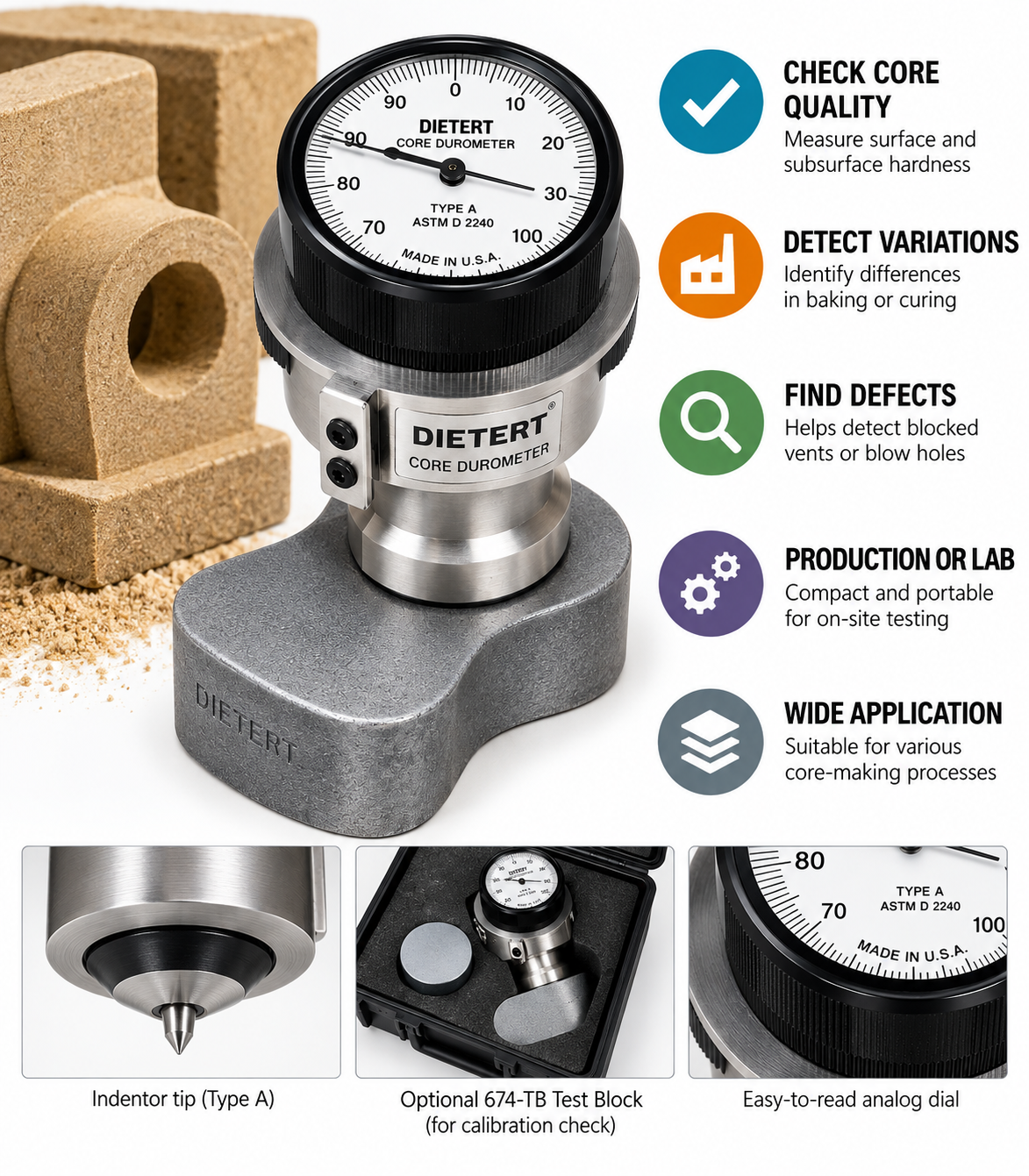
Check core hardness directly in production
Once acceptable hardness limits have been established for a particular core, the Dietert 674 can be used for routine comparison of production cores. Its pocket-sized design makes it practical for carrying out hardness checks directly where cores and molds are produced rather than limiting testing to the laboratory.
Identify variations in baking and curing
Changes in measured hardness can indicate differences in the degree of bake or cure. Dietert also notes that hardness variations can reflect an absence or excess of ingredients in the core mixture, making the tester useful as a quality-control tool for monitoring production consistency.
 Portable hardness testing for foundry cores and dry sand molds
Evaluate surface and subsurface hardness
The Dietert 674 evaluates both surface and subsurface hardness. The instrument uses spring-loaded abrading points to penetrate the sand surface under controlled pressure, with the resulting penetration represented as a relative hardness reading. A harder core produces less penetration and therefore a higher indicated hardness value.
Detect blocked vents and blow holes
The tester can also help detect blockage of vents or blow holes that affect the surface density and hardness of a core. This provides an additional means of identifying manufacturing irregularities before the core is used in the casting process.
Suitable for different core-making processes
The Dietert 674 can be used with a broad range of foundry cores produced by traditional as well as newer core-making methods. This makes it useful for comparative quality-control testing where consistent core hardness is an established production requirement.
Calibration status can be checked with the optional test block
The optional Dietert 674-TB Test Block is manufactured from a consistent material and is used to help determine the calibration status of the No. 674 Core Hardness Tester.
Specifications
| Model | Dietert No. 674 |
|---|---|
| Application | Surface and subsurface hardness of baked cores and dry sand molds |
| Height | 3 in. (76 mm) |
| Maximum diameter | 2 1/8 in. (54 mm) |
| Base diameter | 5/8 in. (41 mm) |
| Net weight | 5 oz. (manufacturer-listed metric equivalent: 425 g) |
| Optional accessory | Dietert 674-TB Test Block |
Frequently Asked Questions
What does the Dietert 674 Core Hardness Tester measure?
It measures the relative surface and subsurface hardness of baked foundry cores and dry sand molds. The reading is based on the penetration produced by the tester under controlled conditions rather than conventional hardness units used for metals.
Can the Dietert 674 be used for routine production quality control?
Yes. Once acceptable control limits have been established for a particular core, the portable tester can be used to compare production cores and identify changes in hardness that may indicate variations in processing or composition.
Can core hardness indicate improper curing or baking?
Yes. Dietert states that hardness measurements can indicate errors in the degree of bake or cure and may also reflect variations in the amount of ingredients used in the core mixture.
What is the Dietert 674-TB Test Block used for?
The optional 674-TB is a block made from a consistent material that can be used to help determine the calibration status of the Dietert 674 Core Hardness Tester.
| Height | 3in. (76 mm) |
| Maximum diameter | 2 1/8 in.(54 mm) |
| Net weight | 5 oz. (425 g) |
| Base diameter | 5/8 in. (41 mm) |
Do you have a question?
min 10 ch