

Dissolved Oxygen Meters
Water analysis oximeters for the field or laboratory. Discover our products from Thermo Orion and Lamotte.

Choosing a Dissolved Oxygen Meter: 5 key considerations
Choose the sensor technology for your application
Dissolved oxygen meters may use optical, polarographic or galvanic sensing technologies. Optical sensors do not consume oxygen during measurement and generally do not require sample stirring, making them useful for low-flow or relatively still samples. Polarographic and galvanic sensors are electrochemical and typically require more probe maintenance, including attention to membranes and electrolyte. Some Geneq meters support more than one sensor technology, allowing greater flexibility between applications.
Consider whether measurements will be made in the field or laboratory
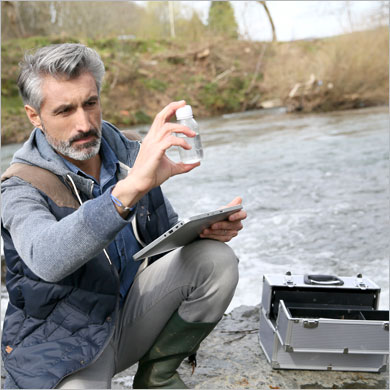
For field work, look for a portable meter with a rugged or waterproof housing, battery operation and a probe cable suitable for the required sampling depth. Benchtop meters are better suited to routine laboratory testing, controlled sample handling and applications requiring electrode stands, advanced data management or multiple measurement methods.
Check the required dissolved oxygen range and measurement units
Most instruments report dissolved oxygen as concentration in mg/L or ppm and as percent saturation. Measurement ranges vary between meters and probe technologies, so the expected oxygen concentration and the type of samples being tested should be considered when selecting an instrument.
Look for temperature, pressure and salinity compensation when needed
Dissolved oxygen measurements are influenced by temperature, atmospheric pressure and salinity. Many advanced meters automatically compensate for temperature and barometric pressure, while salinity can often be entered manually. These functions are especially important for field measurements at different elevations and for saltwater or brackish-water applications.
Consider calibration requirements and probe maintenance
Depending on the meter, calibration may be performed using water-saturated air, air-saturated water, a zero-oxygen reference or a value determined by a reference method such as Winkler titration. Optical probes generally require less routine maintenance, while electrochemical probes may require replacement membranes, electrolyte maintenance and, in the case of polarographic probes, polarization before measurement.
Evaluate data logging and measurement functions
For routine spot measurements, a simple meter may be sufficient. Applications involving environmental monitoring, research, BOD testing or quality-control documentation may benefit from automatic data logging, time and date stamps, sample identification, USB data transfer, selectable reading modes and stored measurement methods.
Consider whether a dedicated or multiparameter meter is more practical
A dedicated dissolved oxygen meter is well suited to applications focused primarily on oxygen measurement. When several water-quality parameters must be measured at the same sampling location, a multiparameter instrument capable of measuring dissolved oxygen together with parameters such as pH and conductivity can reduce the amount of equipment required.
Comparison of Dissolved Oxygen Measurement Technologies
| Technology | Measurement Principle | Sample Movement | Maintenance | Start-Up | Suitable Applications |
|---|---|---|---|---|---|
| Optical | Measures changes in the luminescence of an oxygen-sensitive material | Generally not required | Low; periodic replacement of the optical sensor cap or sensing element may be required | Fast, with no polarization required | Field measurements, still or low-flow water, aquaculture, environmental monitoring and laboratory testing |
| Galvanic | Uses an electrochemical reaction that generates a current proportional to the oxygen concentration | Generally required to maintain a continuous supply of oxygen at the membrane | Membrane and electrolyte require inspection and periodic replacement | Usually ready for measurement quickly | Portable measurements, water-quality monitoring, aquaculture and routine analysis |
| Polarographic | Uses an electrochemical reaction under an applied voltage | Generally required to maintain a continuous supply of oxygen at the membrane | Membrane and electrolyte require maintenance | May require a polarization period before measurement | Laboratory testing, process control, water analysis and routine measurements |
Did you know? 6 facts about measuring oxygen in water:
Some dissolved oxygen probes need water movement to measure accurately
Galvanic and polarographic dissolved oxygen probes consume a small amount of oxygen at the membrane surface while taking a measurement. In still water, the local oxygen concentration can become depleted, so the probe may need to be gently moved through the sample or used with a magnetic stirrer in the laboratory.
Optical DO probes generally do not require sample stirring
Optical dissolved oxygen sensors determine oxygen concentration using luminescence rather than an oxygen-consuming electrochemical reaction. Because they do not consume oxygen during measurement, they are particularly useful for low-flow or relatively still samples where maintaining constant water movement can be inconvenient.
Polarographic probes may require conditioning before use
Unlike galvanic sensors, polarographic dissolved oxygen probes require an applied voltage and may need time to polarize after connection or prolonged storage before stable measurements can be obtained. This is an important consideration when a meter needs to be ready immediately for field measurements.
Membrane condition can directly affect an electrochemical DO reading
Galvanic and polarographic probes use a thin membrane that allows oxygen to diffuse toward the sensor. A damaged, contaminated, wrinkled or improperly installed membrane can affect response and accuracy. Depending on the probe design, the membrane and internal electrolyte are replaceable maintenance items.
Salinity compensation becomes especially important when testing seawater or brackish water
Salt reduces the amount of oxygen that water can hold. Many portable DO meters therefore allow the user to enter a salinity value so the instrument can compensate accordingly. This feature is particularly useful in aquaculture, coastal monitoring and marine-water testing.
Calibration can include both 100% and 0% oxygen reference points
Many DO meters can be calibrated at approximately 100% saturation using water-saturated air, while a zero-oxygen solution can provide a 0% reference point. Depending on the instrument and application, users may perform a one-point calibration for routine work or a two-point procedure for additional verification.
Small air bubbles can interfere with some DO probe measurements
For membrane-based probes, bubbles trapped around the membrane can prevent uniform contact with the sample and affect the measurement. During calibration and testing, the probe should be inspected and positioned so bubbles are not trapped against the sensing surface.