



Water Testing
Water sampling and analysis equipment for the environment sector. View our products for sampling, analysis, flow measurement, telemetry...
Water quality control requires equipment of great versatility and sophistication. Taking samples, checking water level, flow and other analyses requires professional, well-maintained tools. We supply instruments and offer their maintenance / rental, ready and hoping for a long-term engagement with our customers. Discover our partners such as Hack, Horiba, Solinst, Raven, Star Oddi and many more.


Did you know? 7 practical facts about using water-analysis instruments

➤ Some water-quality parameters are best measured directly at the sampling site
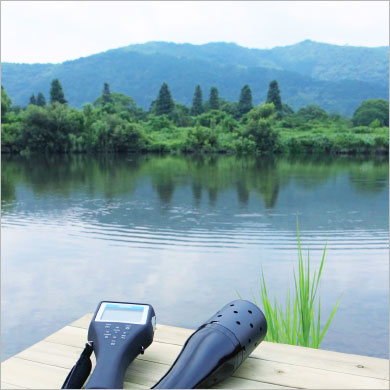
Dissolved oxygen is particularly sensitive to changes after a sample is collected. Contact with air and changes in temperature can alter the result, so DO is often measured directly in the body of water with a portable meter or multiparameter probe rather than relying on a transported grab sample.
➤ A multiparameter meter can reduce the number of instruments needed in the field
Multiparameter systems can combine sensors for parameters such as pH, conductivity, dissolved oxygen, turbidity and temperature in a single probe or meter. This can make field surveys more efficient when several water-quality measurements must be taken at the same locations.
➤ Turbidity meters are designed to measure suspended material, not dissolved substances
Turbidimeters use an optical measurement to evaluate the cloudiness caused by suspended particles in water. They are therefore useful for applications such as source-water monitoring, filtration control and surface-water assessment, while dissolved substances require other analytical methods or instruments.
➤ Conductivity meters can provide more information than conductivity alone
Depending on the instrument, the same conductivity probe and meter may also report total dissolved solids (TDS),salinity and temperature. Selecting the appropriate probe range and temperature-compensation method is important because conductivity can vary greatly between purified water, natural water and saline samples.
➤ Colorimeters and spectrophotometers are used when a chemical parameter is determined from colour or light absorption
Unlike electrochemical meters that directly measure properties such as pH or conductivity, colorimeters and spectrophotometers typically analyze a prepared sample after a reagent produces a measurable colour response. They can be used to determine specific chemical constituents when the appropriate test method and reagents are selected.
➤ A portable pH meter depends heavily on the condition of its electrode
The electronic meter displays the result, but the pH electrode is the sensing component in contact with the water. Proper calibration, rinsing, storage and selection of an electrode suited to the sample are important for obtaining reliable measurements, whether testing in the laboratory or in the field.
➤ Field and laboratory instruments are often complementary rather than interchangeable
Portable instruments are useful for measurements taken directly at rivers, lakes, wells, treatment facilities and other sampling locations. Benchtop instruments provide a more controlled setup for laboratory analysis, while specialized instruments such as spectrophotometers, titrators and reagent-based systems can measure parameters that cannot be adequately characterized with a simple field probe.